Monday, May 1, 2017

夏休みの予定

こんにちは、

みなさんの夏休み要諦は何ですか。

僕は今年の夏休みの予定はPIIですね。とても楽しそうですね。PIIで行きたいことがたくさあるんですね。でも、今もう計画した要諦は夏休み楽器の中である休みに韓国からくる家族と関西涼子ですよ。PIIの中で新しい友達とたくさん涼子したいです。多分朱抹に。


そして、一年生の時の日本絵の授業の教授が僕に金沢に市場の石井レストランをお薦めできますね。ですから、金沢にたくさん食べるの準備準備はいいですね。

じゃあ、またね!

Monday, April 24, 2017

先週は大変だね。。。

こんにちは、

みなさんの朱抹はどうでしたか。私のはちょっと大変ですね。

どうして?

トレーニングをしすぎましたね。なぜならば,あまりにも無理だから、体がいたくて寝られなかったんです。それでも、宿題はしました。そうして、両親と電話した後に気分はよくなりました。論文とテストが多いこのごろ健康に気をつけなさいよ。


じゃあ、またね!

Wednesday, March 29, 2017

Midterm PE Reflection

こんばんは。

Progress Made:

Accuracy of Pitch and Intonation
While I believe overall phrase-level intonations have improved (natural へ), pitch is an area where I still struggle (i.e. the Prosody Listening Exercises) especially at the word-level (though I've begun to memorize pitches for more vocabulary without help from suzuki-kun).

Pace/Speed During Recordings
Over time, based on my own reflection and on feedback from しばたせんせい, issues with awkward, wrong pauses and rushing are an area where I seem to improved significantly and the speed of my speaking is generally more natural.

Confidence During Conversation
Again, the volume at which I speak has definitely improved, which is a good sign in terms of confidence and I believe I've been willing to be confident and stretch the use of my Japanese (i.e. use of new vocab). However, when in actual, non-guided conversation situations, my confidence in speech I know is still very shaky and buffering.

Listening Abilities 
To become a better speaker, I need to be good at picking up on what the correct pronunciation is. I have definitely improved (reflected in my test vs. midterm listening sections) in identifying parts like voiced consonants. My listening has also improved in identifying and understanding more recently learned/complex grammar structures.

今後の計画:

Production Practice
  • Refer to OJAD for accuracy while doing extra shadowing exercises from databases such as the poems in kizuna311
  • Invest more time into existing PE exercises
  • Do Nakama-related exercises 

Speaking Opportunities
  • Attend either the Japanese language table at Forbes or Mathey-Rocky per week
  • Go to office hours for free conversation sessions

読んでくれてありがとう。
じゃあ、またね!

Monday, March 27, 2017

春休みに何したか?

こんにちは、

みなさんの春休みはどうでしたか。中間テスト以降にたくさん寝ましたか。私は今度の休みには海外旅行に行きませんでした。今度の休みにはニューヨークとボストンに行って友達と会って映画を見ました。春休みはとても楽しくて、よかったですよ。

じゃあ、またね!
ニューヨークのAMC映画館でローガンを見ました!

ボストンの歴史地区はとても綺麗です〜〜〜


Monday, February 20, 2017

ビデオブログスクリプト: 私の家族

皆さんこんにちは。

今から私の家族を紹介させて頂きます。

私は4人家族です。

今はソウルに住んでいます。

これは家族写真。

こちらが 父です。
父は投資会社をしています。 
たまにきびしいが、 非常におもしろいです。 
前に水泳をするので、体格がいいですね

こちらが母です。 
母はイタリア語教授です
家族の中で、料理をするのが上手です。 

こちらは私の弟です。 
弟は私のいうことあまりきかないんですが、それでもとても品説かわいいです。
今、家族の中で、一番背が高いです。

そして、私の家族の趣味は野球場に行くことです。

以上で私の家族の紹介を終わらせて頂きます。

ありがとうございました。
また会いましょう

Wednesday, February 8, 2017

PE Reflection + JPN102 PE Plan (頑張ります!)

こんばんは。


It has already been 一学期 since the start of my 日本語の挑戦. 時間が本当に早いですね。Below are some reflections I have on the progress I made during semester 1 and how I hope to improve in the future:

Progress Made:

Accuracy of Pitch and Intonation
While I believe overall phrase-level intonations have improved, pitch is an area where I still struggle (i.e. the Prosody Listening Exercises) especially at the word-level.

Pace/Speed
Over time, based on my own reflection and on feedback from しばたせんせい, issues with awkward, wrong pauses and rushing are an area where I seem to improved significantly and the speed of my speaking is generally more natural.

Confidence
The volume at which I speak has definitely improved, which is a good sign in terms of confidence and I believe I've been willing to be confident and stretch the use of my Japanese (i.e. use of new vocab). However, when in actual, non-guided conversation situations, my confidence in speech is still shaky.

Listening Abilities 
To become a better speaker, I need to be good at picking up on what the correct pronunciation is. I have definitely improved (reflected in my test vs. midterm listening sections) in identifying parts like voiced consonants. However, I believe I'm still to slow in processing what I've listened to.

JPN102 PE Plan:

Production Practice
  • Refer to OJAD for accuracy while doing extra shadowing exercises from databases such as the poems in kizuna311
  • Invest more time into existing PE exercises
  • Do Nakama-related exercises 

Speaking Opportunities
  • Attend the Japanese language table weekly at Mathey-Rocky as well as the other residential college locations to challenge myself and stretch my command of the language
  • Attend せんせえ's office hours with more of a focus on conversation and more practice
  • Go to office hours for free conversation sessions

読んでくれてありがとう。
じゃあ、またね!

私の中休み

こんばんは、

先週、私はヨーロッパの旅行に行きました。ソンさんとノルウェーとドイツ、チェコとオーストリア,そしてデンマークに行きました。とても忙しかったです。国の中で私はデンマークが一番好きでした。デンマークのコペンハーゲンはたくさん海の幸ときれいな建物があったので、私は楽しかったです。皆さんもぜひ一度行ってください。


読んでくれてありがとう。
じゃあ、またね!

Thursday, January 12, 2017

Final PE Reflection

こんばんは。

It has now been 学期 since the start of my 日本語の挑戦. 楽しかったですね。Below are some reflections I have on the progress I've made on my pronunciation and speaking goals during JPN101:

Progress Made on Goals:

Accuracy of Pitch and Intonation
I think that I have made some progress in PE in terms of pitch and intonation. I believe I am able to memorize pitch and intonations of words fairly well. But as, reflected in shadowing assignments, I tend to concentrate on intonations and speed, but in the process pronounce wrong syllables. I believe more practice and speaking practice is important. I hope to continue more practice in the coming semester.

Pace/Speed
I think I have improved the most in terms of pace and speed. My shadowing has been consistently receiving positive feedback when it comes to the pace and speed category. However, I still have a great space to improve in terms of clarity and intonation and cannot allow speed to sacrifice the former. My hope is to be do well at both simultaneously going forward.

Confidence
Through weekly practice, video blogs and free conversation, I've had a very good spectrum of opportunities to improve my confidence. I believe that I am willing to speak even when hesitant, but the fundamental issue with confidence I believe now stems from the need to simply review more. I hope to increase my weekly review schedule in semester 2.

Listening Abilities 
I believe my listening abilities is the area where I have the greatest space to improve, whether its listening to the shadowing examples or in dict-a-conversation. I believe I am still slow in both recognition (have to write down in romaji) as well as in sensing intonations/extended vowels. I hope to do more textbook/workbook listening exercises for the PE next semester.
読んでくれてありがとう。
じゃあ、またね!

私のふゆ休み!

こんばんは。

あけましておめでとうございます。ふゆ休み䛿どうでしたか。私はふゆ休みはよっかたです。おばあさんのうちに行きました。かぜがあるので、大変でした。でもクリスマスにたくみおじさんのまちでかぞくのパチがあるので、楽ですね。

かぞくのしゃしん 😊

読んでくれてありがとう。
じゃあ、またね!

Thursday, December 22, 2016

クリスマスに、日本人は何をしますか

みなさんこんばんは。

クリスマス日本人はケンタッキーを食べます

どうして???


ある日、日本に住む外国人の方がケンタッキー青山店で「日本ではターキーが手に入らないので、 KFCのチキンでクリスマスを祝おう」と来店。これにヒントにクリスマスにはケンタッキーを広くアピールしようと考え1974年12月1日にキャンペーンが開始された. クリスマスはケンタッキー.

綾瀬 はるかさん!!!(すみません。。。)


メリークリスマス!!!
じゃあ、またね!

Monday, November 28, 2016

マスクファッションとモバイルの勉強

みなさんこんばんは。

どんどん寒くなってきている。マスクを着けのはどうですか。外国人が日本の奇妙な風習だと感じることのひとつに、街中でマスクをしてる人がとても多いことが挙げられます。病気の予防」だけでなく、ファッション、暖かさ、さらには「他人との会話を避けるためにもマスクを着用すると紹介されていました。最近寒いから、試してみてください。


冬休み前に購入することはどうですか!

しかし、まだ我々皆忙しいですね。それでも動きながらも日本語の勉強の方法がないでしょう。

文法を勉強ためにTae Kim'sはお勧めします。
https://play.google.com/store/apps/details?id=com.alexisblaze.japanese_grammar

単語と会話の練習のためには推薦してあげたいですLearn Japanese
https://play.google.com/store/apps/details?id=com.bravolang.japanese

下にリンクで他のアプリも参考にしてください:
http://www.fluentu.com/japanese/blog/best-apps-for-learning-japanese/

読んでくれてありがとう。
じゃあ、またね!

Wednesday, November 23, 2016

EAS 329(Politics of Japan)とガリガリ君の広告

みなさんこんばんわ。

If you are looking for courses (課目/かもく) for next semester (来学期/らいがっき), a course I really would like to recommend is EAS 329(Politics of Japan). It's a small class that should give a good survey of Japanese politics, history and society. I'll be taking the course, so if you decide to take the class, see you there!

リンク:
https://registrar.princeton.edu/course-offerings/course_details.xml?courseid=010516&term=1174

In other interesting Japan news, I found a recent television ad for ガリガリ君 really funny and wanted share. ガリガリ君 is an iconic Japanese bar ice cream and the company recently made the decision to raise the price from 60 to 70 yen. The advertisement is one endearing apology. Enjoy below:


読んでくれてありがとう。
じゃあ、またね!

Thursday, November 10, 2016

PE Reflection + Revised PE Plan (頑張ります!)

こんばんわ。

It has already been さんかげつ since the start of my 日本語の挑戦. 時間が本当に早いですね。Below are some reflections I have on the progress I've made on my pronunciation and speaking goals and how I hope to get even closer to achieving my goals:

Progress Made on Goals:

Accuracy of Pitch and Intonation
While I believe overall phrase-level intonations have improved, pitch is an area where I still struggle (i.e. the Prosody Listening Exercises) especially at the word-level.

Pace/Speed
Over time, based on my own reflection and on feedback from しばたせんせい, issues with awkward, wrong pauses and rushing are an area where I seem to improved significantly and the speed of my speaking is generally more natural. I still do, however, tend to miss or create pauses when speaking and not confident.

Confidence
The volume at which I speak has definitely improved, which is a good sign in terms of confidence and I believe I've been willing to be confident and stretch the use of my Japanese (i.e. use of new vocab). However, when in actual, non-guided conversation situations, my confidence in speech is still shaky. Before, even when practicing based on examples, I felt very unsure about whether I'm actually saying certain words or phrases I naturally and accurately (i.e. ございます). Now using OJAD and other resources, I don't feel that way as much.

Listening Abilities 
To become a better speaker, I need to be good at picking up on what the correct pronunciation is. I have definitely improved (reflected in my test vs. midterm listening sections) in identifying parts like voiced consonants. However, I believe I'm still to slow in processing what I've listened to.

[Revised] Activities for Improved PE:

Production Practice
  • Create a weekly phrase list of じゅ for shadowing (daily listening of example and practice before bed)
  • Refer to OJAD for accuracy in tandem with weekly phrase list practice
  • Do Nakama-related exercises 

Speaking Opportunities
  • Practice with Japanese friends over meals (光田さんしゅんさんありがとございます)
  • Continue to attend the Japanese language table weekly
  • Attend せんせえ's office hours with more of a focus on conversation and more practice.

    Perception and Mimicking Practice
    • Keep up with a new anime/ドラマ and re-watch favorites (i.e. 鋼の錬金術師, 人狼, 旦那が何を言っているかわからない件). Become familiar with rhythm and intonation. Choose a scene with common phrase or interesting meaning to shadow. Select for PE exercises.
    • Be more committed to listening to a Japanese vocab song per day.

    Japanese Vocabulary Songs Playlist


    読んでくれてありがとう。
    じゃあ、またね!

    Thursday, November 3, 2016

    にほんのおかし

    みなさんこんばんわ。

    きょう、私はアジアのスーパーに行きます。 スーパーでにほんのおかしを買います。Below are some of the にほんのおかし I bought:


    カステラ: A castilla can be a soft, sponge-like snack. My favorite kind are the Nagasaki castilla. However, the スーパー sold castilla are dry and overly sweet and sticky
    点(てん): 3/5


    クレヨンしんちゃんのおかし: A childhood favorite of mine. The crunchiness and chocolate cream are great. I wish they put more of it in the box though.
    点(てん): 4/5


    もち: Great to chew in terms of the texture and a pleasure to bite into the red bean paste core. Must I say more.
    点(てん): 5/5


    まっちゃのエリーゼ: The green tea wafers don't taste that must different from ordinary wafers. They are still a good snack to go with a warm drink or to be devoured by the box.
    点(てん): 4/5


    Pocky: Easy-eating, sweet and highly addictive. That's all I have to say.
    点(てん): 5/5


    ゼリー: The jellies are shaped in cute and honestly remarkable shapes of foods such as hamburgers. But they also feel really unhealthy and after a couple they can get a little tiring.
    点(てん): 3/5


    まっちゃのキットカット: I always make sure to buy and bring back packs of my favorite snacks from countries I visit. When visiting the Philippines, its dried mangoes. When visiting China, it's grain puffs. When visiting Japan, it's the green tea KitKat. The crunchy, but not overly heavy, delivery of chocolate and green tea is so very good.
    点(てん): 5/5


    まっちゃのオレオ: I have never actually come across green tea Oreos before so I had to try them. However, I've also never enjoyed Oreos too much (though the green tea cream did make it less stuffy/dry and more refreshing than usual).
    点(てん): 2/5

    ...if you're interested in snacks like the above (but don't have the time or means to drive to Edison or Fort Lee or Palisades Park)...

    ...one solution is to sign up to a monthly Japanese snack box delivery service like 
    https://www.skoshbox.com/ (which delivers a box of Japanese snacks to your doorstep each month for $10/month)

    読んでくれてありがとう。
    じゃあ、またね!

    天気(てんき)ときせつ + 言の葉の庭 (anime drama film "The Garden of Words")

    It's already fall and winter is actually not too far away. Personally, I feel it's been quite amazing how quickly the past year has gone by. In turn, I thought it would be an apt time to learn about the seasons and also to describe the weather (which has been relaly erratic lately, so its always worth checking and asking about these days).

    In Japanese, the seasons (きせつ/季節) are...
    はる/春 = Spring
    なつ/夏 = Summer
    あき/秋 = Fall
    ふゆ/冬 = Winter


    As for asking about the weather, the following are some useful phrases I've found! 
    *You can add とてもinfront of the adjective if you want to say "very"

    きょう の てんき よほう は なん です か 
    今日 の 天気 予報 は 何 です か 
    What’s the weather forecast for today?

    てんき は どう ですか 
    天気 は どう ですか 
    How’s the weather?

    きおん は なんど です か 
    気温 は 何度 です か 
    What’s the temperature?

    ...and if you want to answer...

    あたたかい です 
    暖かい です 
    It’s warm

    さむい です 
    寒い です 
    It's cold

    かぜ が つよい です
    風 が 強い です 
    It's windy

    あつい です 
    暑い です 
    It's hot

    せいてん です 
    晴天 です 
    It's clear

    むし あつい です 
    蒸し 暑い です 
    It's humid

    ...and if its raining (as it was today) or snowing...

    あめ が ふって います 
    雨 が 降って います 
    It’s raining

    ゆき が ふって います 
    雪 が 降って います 
    It’s snowing

    Speaking of rain, and considering the weather today, an anime movie I watched recently that really matches the atmosphere and mood is 言の葉の庭 ("The Garden of Words"). The film focuses on Takao Akizuki, an aspiring 15-year-old shoemaker, and Yukari Yukino, a mysterious 27-year-old woman he keeps meeting at Shinjuku Gyoen National Garden on rainy mornings. While Takao is skipping his morning class to design shoes, Yukino is avoiding work due to personal problems in her professional life. The two continue to cross paths and they increasingly come to effect each other profoundly in different ways. Below is a trailer!


    I hope you all found the above helpful and interesting!

    読んでくれてありがとう。
    じゃあ、またね!

    Thursday, October 13, 2016

    毎週(まいしゅう) けいかく: 二番目週(にばんめしゅう))

    みなさんこんばんわ。

    Below is my second "study plan of the week" for improving in PE and Japanese in general. すみません, parts of the study guide are in 韓国語 because it helps me understand more easily as the languages are similar. I will also try to record an extra conversation style PE over the weekend with a 友達:


    Week of 12OCT16

    Weekly Vocab/Phrases
    Fun, interesting = おもしろい
    Are Similar/비슷하다 = 似ています
    teach = おしえます
    Learn Actively (まなびます) vs Learn Passively (ならいます)
    かぞくかんけいのたんご (i.e. 岡さん、おとさん、etc.)

    My own family


    1.家族かぞくkazokuFamily / Family Members
    2.祖父そふsofuGrandfather
    3.祖母そぼsoboGrandmother
    4.伯父おじojiUncle (Older than Parent)
    5.叔父おじojiUncle (Younger than Parent)
    6.伯母おばobaAunt (Older than Parent)
    7.叔母おばobaAunt (Younger than Parent)
    8.両親りょうしんryoushinParents
    9.ちちchichiFather
    10.ははhahaMother
    11.兄弟きょうだいkyoudaiSiblings / Brothers
    12.姉妹しまいshimaiSisters
    13.あにaniOlder Brother
    14.あねaneOlder Sister
    15.おとうとotoutoYounger Brother
    16.いもうとimoutoYounger Sister
    17.夫婦ふうふfuufuMarried Couple / Husband and Wife
    18.主人しゅじんshujinHusband
    19.おっとottoHusband
    20.家内かないkanaiWife
    21.つまtsumaWife
    22.従兄弟いとこitokoCousin (Male)
    23.従姉妹いとこitokoCousin (Female)
    24.子供こどもkodomoChildren
    25.息子むすこmusukoSon
    26.むすめmusumeDaughter
    27.おいoiNephew
    28.めいmeiNiece
    29.まごmagoGrandchild
    30.義理の兄ぎりのあにgiri no aniBrother-in-law (older than you)
    31.義理の弟ぎりのおとうとgiri no otoutoBrother-in-law (younger than you)
    32.義理の息子ぎりのむすこgiri no musukoSon-in-law
    33.義理の~ぎりの~giri no ~~-in-law

    Someone's family
    1.ご家族ごかぞくgo kazokuSomeone's Family / Family Members
    2.お爺さんおじいさんojii sanGrandfather / Old Man
    3.お婆さんおばあさんobaa sanGrandmother / Old Woman
    4.伯父さんおじさんoji sanUncle (Older than Parent)
    5.叔父さんおじさんoji sanUncle (Younger than Parent)
    6.伯母さんおばさんoba sanAunt (Older than Parent)
    7.叔母さんおばさんoba sanAunt (Younger than Parent)
    8.ご両親ごりょうしんgo ryoushinParents
    9.お父さんおとうさんotou sanFather
    10.お母さんおかあさんokaa sanMother
    11.ご兄弟ごきょうだいgo kyoudaiSiblings
    12.お兄さんおにいさんonii sanOlder Brother
    13.お姉さんおねえさんonee sanOlder Sister
    14.弟さんおとうとさんotouto sanYounger Brother
    15.妹さんいもうとさんimouto sanYounger Sister
    16.ご夫婦ごふうふgo fuufuMarried Couple / Husband and Wife
    17.ご主人ごしゅじんgo shujinHusband
    18.奥さんおくさんokusanWife
    19.お子さんおこさんoko sanChildren
    20.息子さんむすこさんmusuko sanSon
    21.お嬢さんおじょうさんojou sanDaughter
    22.お孫さんおまごさんomago sanGrandchild


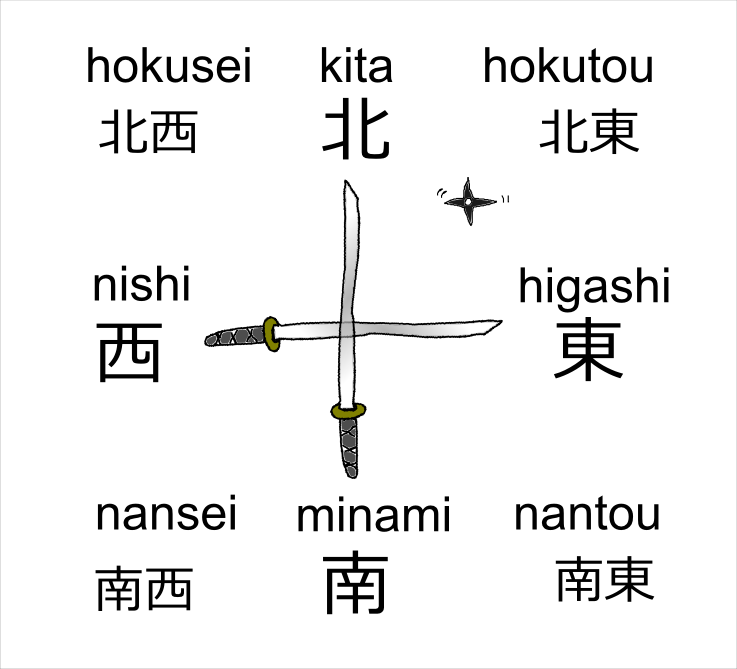
    How do you ask for directions and answer direction questions?

    • http://www.dummies.com/languages/japanese/how-to-ask-for-and-understand-directions-in-japanese/
    • https://tokyocheapo.com/living/basic-guide-directions-japanese/


    Learn Actively vs Learn Passively?


    Weekly Particle
    ので vs から
    • ので = more polite から (a.k.a more formal because)

    Weekly Grammar Rule

    • How to use AよりB
    • Ways to say "and"/connect words in Japanese
      • と for nouns
        • ...but や is used when there is a variable/unknown length like 
          • "キーボードやマウス、それにLANケーブルとかもいるかも"
          • (we need) keyboard, mouse and probably LAN cables also.
      • ~て is used with the て replacing parts of word that is not root
        • avoid the complexity of using the te-form by making independent sentences. You can use それから between the new sentences from split original sentence.
      • ~たり is used to connect two verbs and is used in the sense of giving examples
      • ~くて is used to connect to adjectives
      • ~し is used to connect two adjectives, with exclusive positive or negative senses
      •  ~かつ~ = plus ..../not only... /but also ...
      • たり= 나열하여 서술할 때 쓰는 말: 혹은…, 혹은…; 또는…, 또는…; …고, …고.…거나; …든지.

    Music Playlist (memorable song and lines to shadow)
    つばさ(Anime Arslan Senki: Fuujin Ranbu Theme)
    https://itun.es/us/mnmkdb?i=1126745126
    http://www.lyrical-nonsense.com/lyrics/eir-aoi/tsubasa/

    Anime/Film/Drama of the Weekend (memorable words & lines to shadow)
    All About My Siblings 若者たち episode 1
    *すみません、I did not find time to watch last week so this is a repeat

    Questions of the week?
    What are some titles for people besides せんせいと先輩? (i.e. professor, boss, etc.)


    Referring to self
    • わたし = I 
    • あたし =  female I
    • おれ = informal male I
    • ぼく = male 'me'
    • わたくし = extremely formal I
    • わし = what old people call themselves
    • じぶん = insistent, expressive, "내 자신은 이렇게, 자기주장 표현할때" I

    Referring to others
    • ~さま is equal to ~님 (i.e. when someone hands you your purchase at department store they may say "キムサマ here is your 'somthing'")
    • ~くん can be used for young boy, for boyfriend or between co-workers, close friends
    • ~たん is used by young children as variation of さん.
    • っち = young people's colloquial 
    • おまえ = you
    • あなた = you
    • あんた = informal you used by females
    • おなた = 당신
    • しゃちょう = 사장님/your boss
    • [Interesting fact] さん can be added behind name of company that is your client
    What is the difference between れい, まる and ゼロ?

    • れい = more formal, used for exceptions like temperature
    • まる = colloquial
    • ゼロ = common use


    読んでくれてありがとう。
    じゃあ、またね!